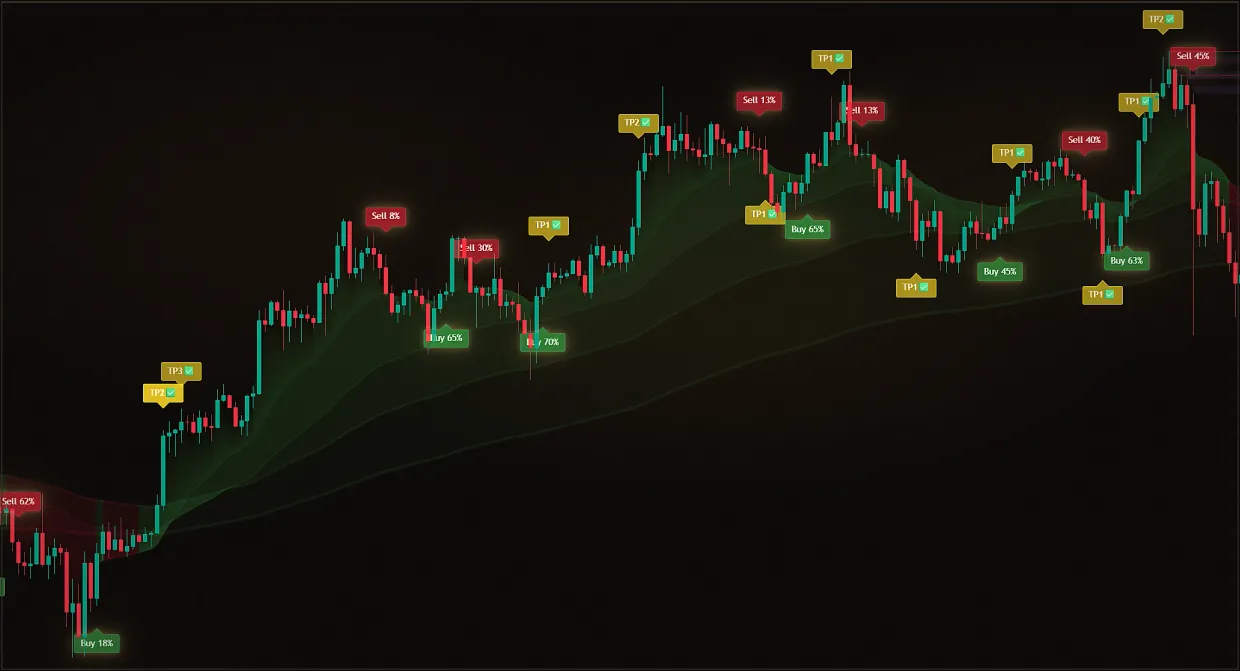
Divergence is a situation when the price and the indicator tell different stories. The price makes a new high, while the oscillator (most often RSI, MACD, or stochastic) forms a high lower than the previous one. Or vice versa: the price drops to a new low, while the indicator is already turning upwards. Divergence shows that there is less strength behind the movement, even if this is not yet visible on the chart itself.
There are two types. Bearish divergence: rising price and falling indicator - a warning for buyers. Bullish divergence: falling price and rising indicator - a warning for sellers.
Important limitation: divergence indicates weakness in the movement, not its reversal. In a strong trend, divergence can persist for weeks, and the price continues to move in the same direction all this time. Therefore, divergence is used as a reason to take a closer look at an asset, not as an independent trading signal – it is confirmed by market structure, levels, and volume.