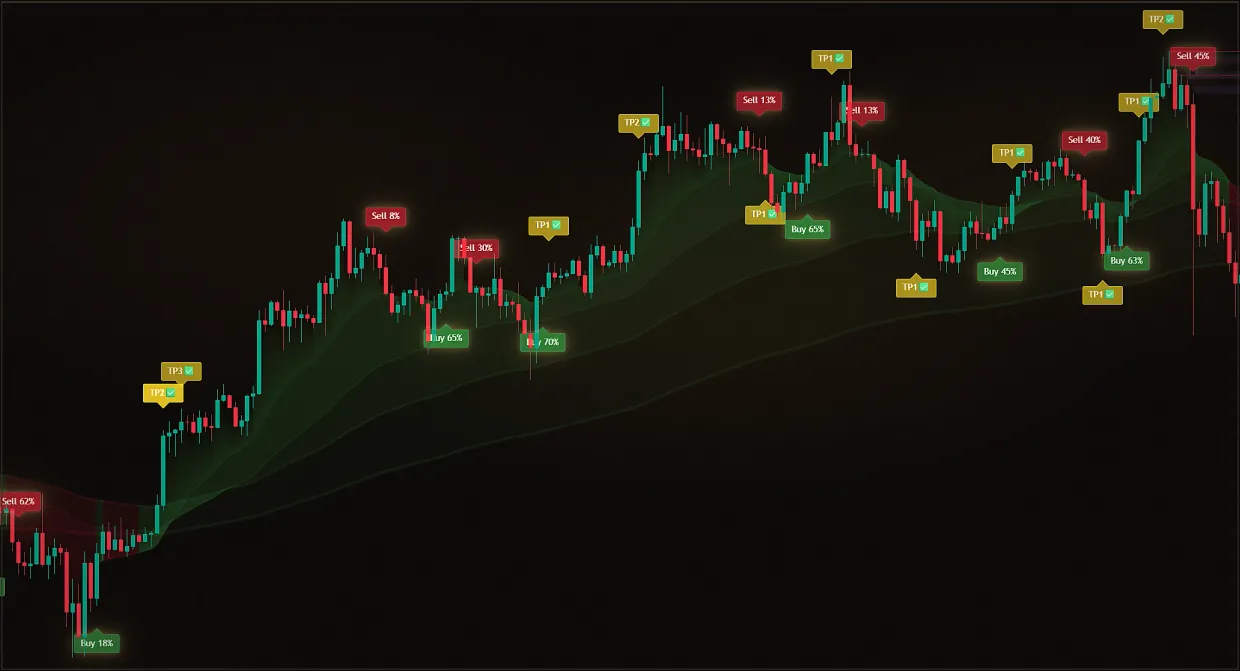
Market noise consists of fluctuations caused by random order flow rather than a meaningful change in how participants value an asset. In the moment, it can be impossible to distinguish noise from the start of a real move; the difference becomes clear only later. That is why noise is costly: it looks like a signal until hindsight proves otherwise.
The proportion of noise depends on the scale. On the one-minute chart, it is almost everything; on the daily chart, small fluctuations are compressed inside the candles and stop interfering. Moving to a higher timeframe is the simplest and most effective way to reduce its impact, although it also reduces the number of trades.
The second line of defense is the distance to the stop. A stop placed too close to the entry price triggers on the market's normal fluctuations, even when the idea is correct. Tying the distance to volatility solves this problem better than a fixed number of points.
The third is confirmation by the candle close instead of reacting to movement within it. Most intraday breakouts of the level are canceled before the close, and a person who waits for it simply does not see a significant portion of false signals. The desire to react faster almost always means agreeing to take more noise.