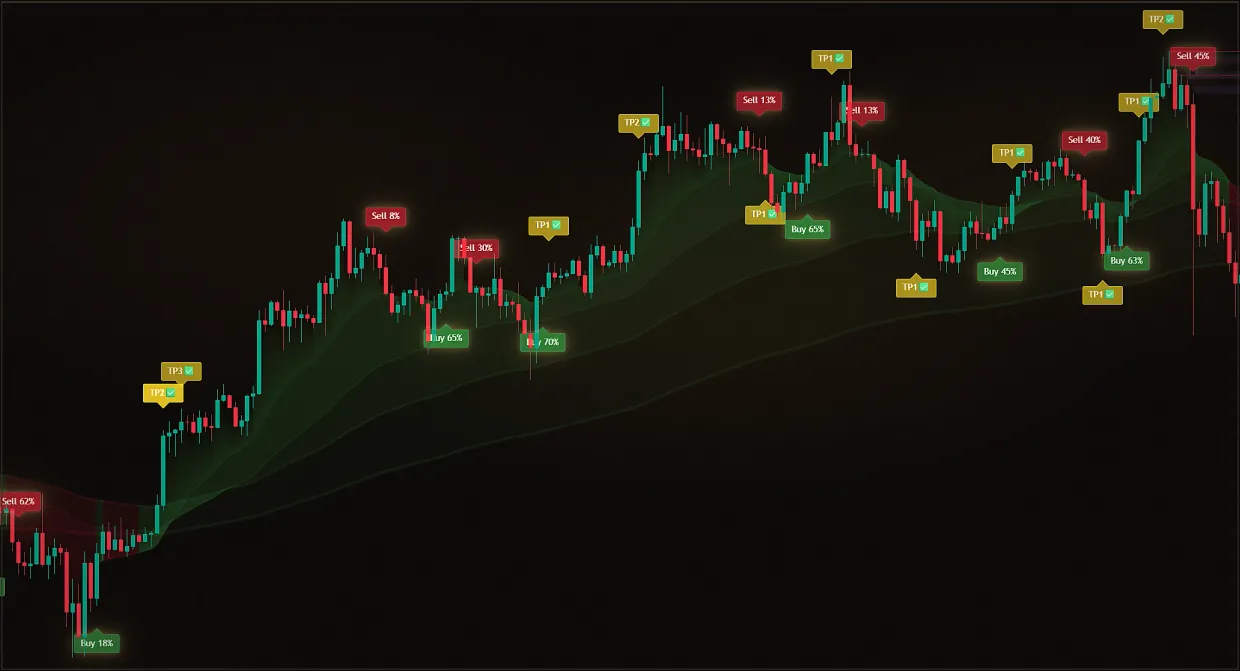
The breakout is interesting because there are few opposing orders beyond the level, and the price quickly moves through the empty zone. Additional fuel is provided by stops: those who traded from the level close exactly beyond it, and their closures push the price further.
The same mechanism also explains false breakouts. The accumulation of stops beyond an obvious level is an attractive target. The price goes beyond the limit, collects these orders, and returns to the range, leaving a long shadow behind. For those who entered at the very breakout, this turns into a loss almost immediately.
Standard breakout filters include waiting for the candle to close beyond the level rather than reacting to an intrabar move, checking whether volume supports the move, and waiting for a retest. A retest returns to the broken level from the other side; if the level holds, it confirms the role reversal and may provide an entry with a tight stop.
Filters have a cost: a confirmed entry is farther from the level, the stop may be wider, and some of the sharpest moves will be missed. Choosing between an earlier entry with more false signals and a later entry with fewer of them depends on the system and its acceptable risk; neither choice is universally correct.