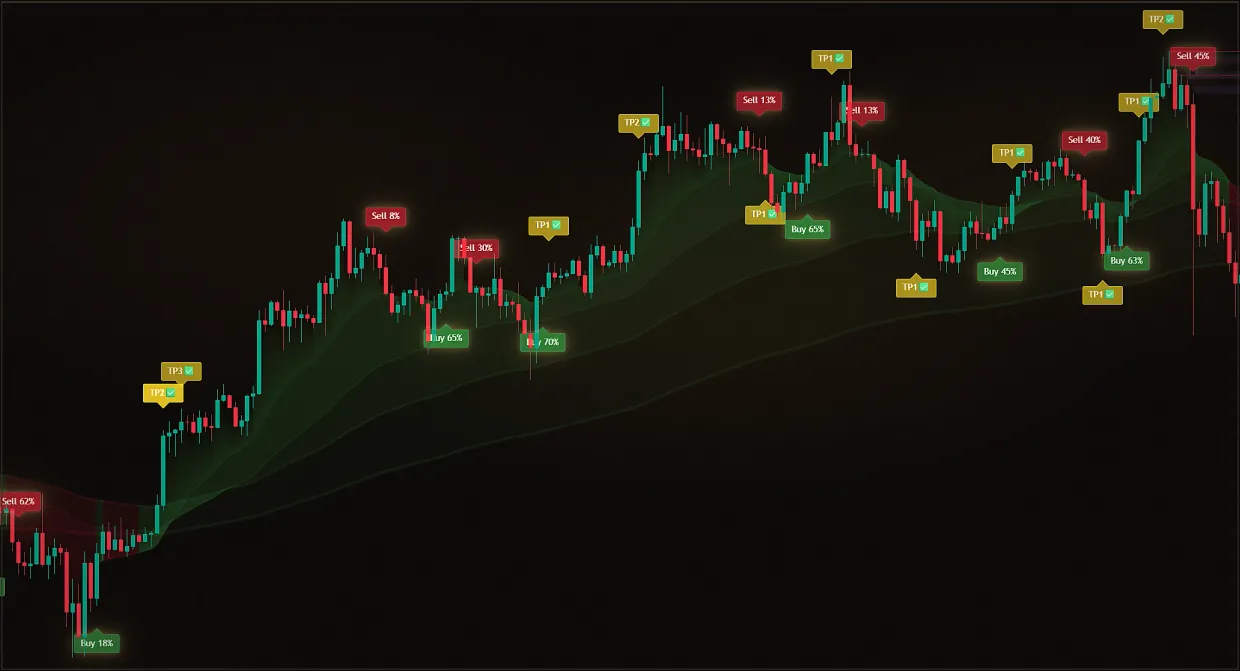
Overbought is an assessment of momentum, not fair price. An oscillator looks at how quickly the price has moved up in the last N candles, and if the surge is above normal, the value hits the upper zone. For RSI, this is traditionally the 70 level, for Stochastic - 80. The numbers are conventional: they were chosen decades ago, and for a specific asset and timeframe, they often need to be adjusted.
The most expensive mistake a beginner can make is interpreting overbought conditions as a ready-made sell signal. In a strong upward movement, the indicator enters the upper zone at the very beginning and stays there throughout the entire move. Selling against such a movement just because "the instrument shows a lot" means going against the entire market.
How overbought conditions are used meaningfully. First: as an entry filter - not to buy at the moment when the movement has already accelerated, but to wait for a pullback. Second: as a reason to take a closer look at the asset, then the decision is made based on market structure and levels. Third: in combination with divergence, when the price makes a new high, but the indicator does not confirm it.
In a sideways market, overbought conditions work noticeably more honestly than in a trend: there, the price really has a ceiling from which it reverses.