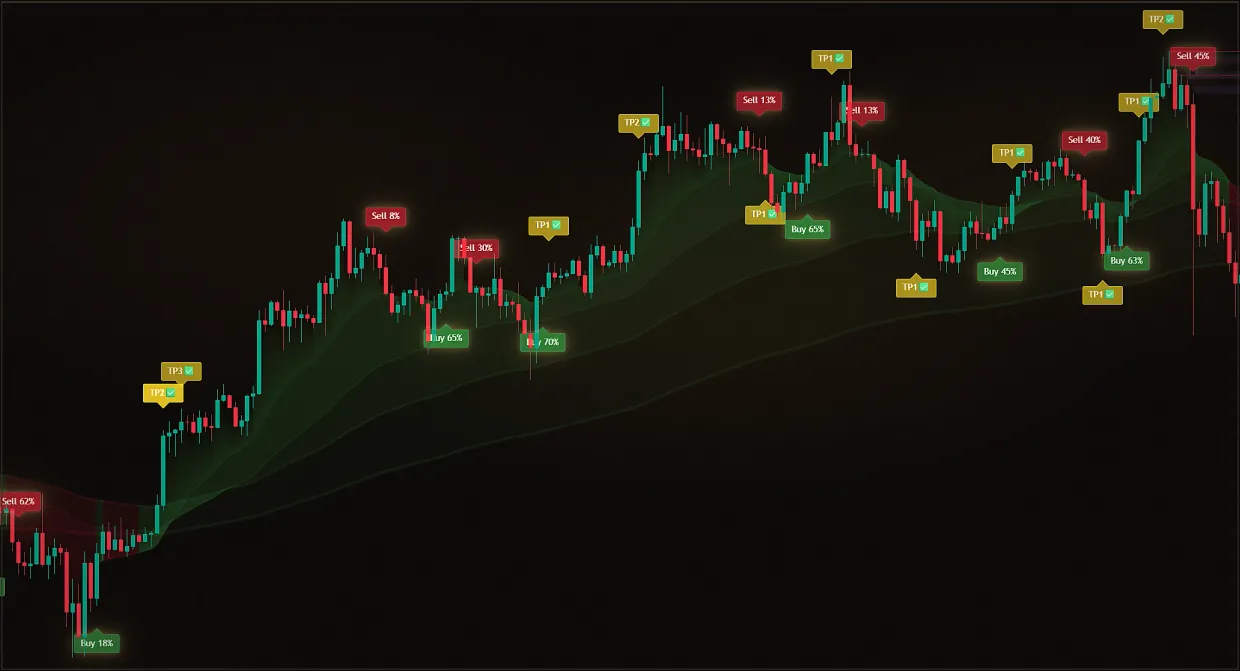
Oversold means one thing: over the last N candles, selling has been noticeably stronger than usual. For RSI, the conventional threshold is 30; for the stochastic oscillator, it is 20. The indicator does not say that the asset has become cheap, much less promise a reversal.
Trying to catch a falling market based on oversold conditions is a classic way to damage an account. When bad news breaks or the market enters a prolonged decline, the oscillator may plunge into the lower zone on the first day and remain there throughout the drop. Each purchase made solely because the asset is 'oversold' may soon look expensive.
The practical approach is the same as with overbought conditions. Oversold conditions are a reason to take a closer look at the asset, not a signal to enter. Next, confirmations are needed: a halt in the decline according to the structure, a reaction from a significant level, a reversal candlestick pattern, a bullish divergence. It's also worth paying attention to volume separately – a reversal that is not accompanied by volume often turns out to be a pause in the decline.
A useful habit: decide in advance what exactly will be considered confirmation, and do not enter until it is present. The indicator in the lower zone creates a strong sense of missed opportunity, and it is better to make a decision beforehand, rather than during.