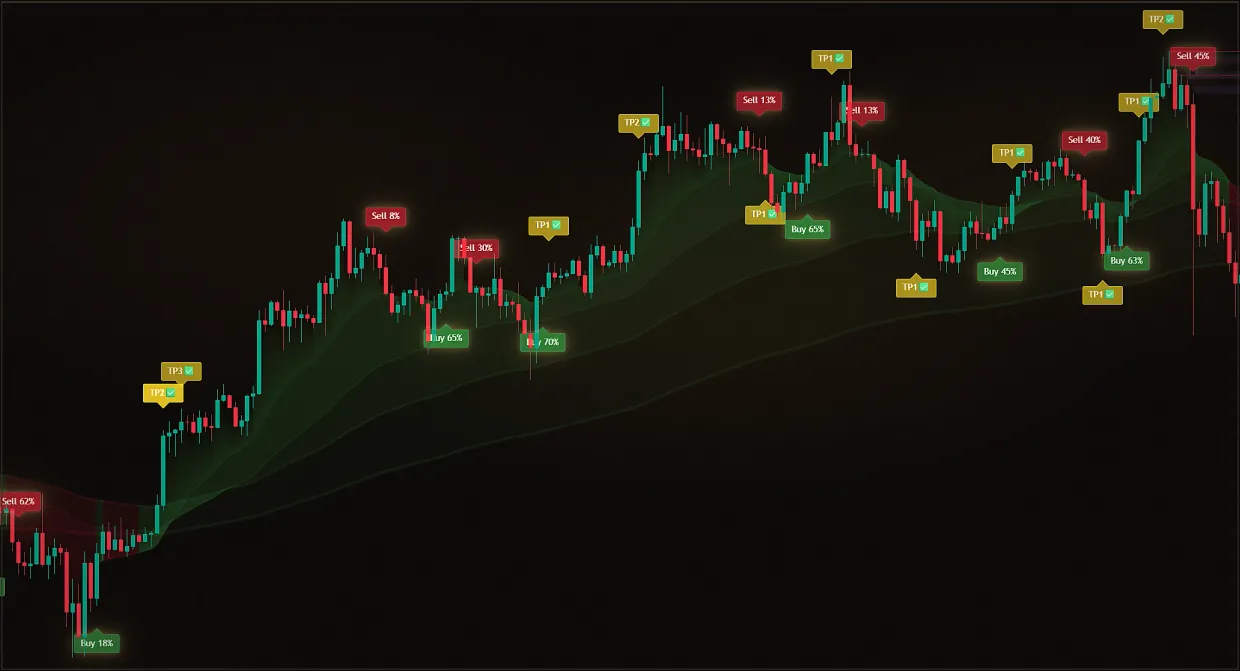
A signal makes sense only within a system of rules. The same event—say, the crossing of two moving averages—gives a working entry in a trending market, but in a sideways market it generates a stream of false triggers. Therefore, any signal has a context in which it is valid, and a context in which it is ignored.
A meaningfully described signal includes not only the triggering condition, but everything else: on which timeframe it is read, which filters should match, where the stop is placed, where the target is, and what the position size is. Without these parts, a "signal" turns into an arrow on the chart, from which it is impossible to calculate risk.
It is worth distinguishing separately between an indicator signal and a ready-made recommendation from an external source. The first one you can verify: see how it behaved in the past, understand the calculation logic, assess in what market conditions it works. The second one has to be taken on faith, and it is almost impossible to check it retrospectively - it is easy to collect a sample of successful cases for any method.
And a sober thought at the end: even a well-described signal makes mistakes regularly. The result is brought not by a single successful entry, but by disciplined repetition of rules over a long series of trades with controlled risk.