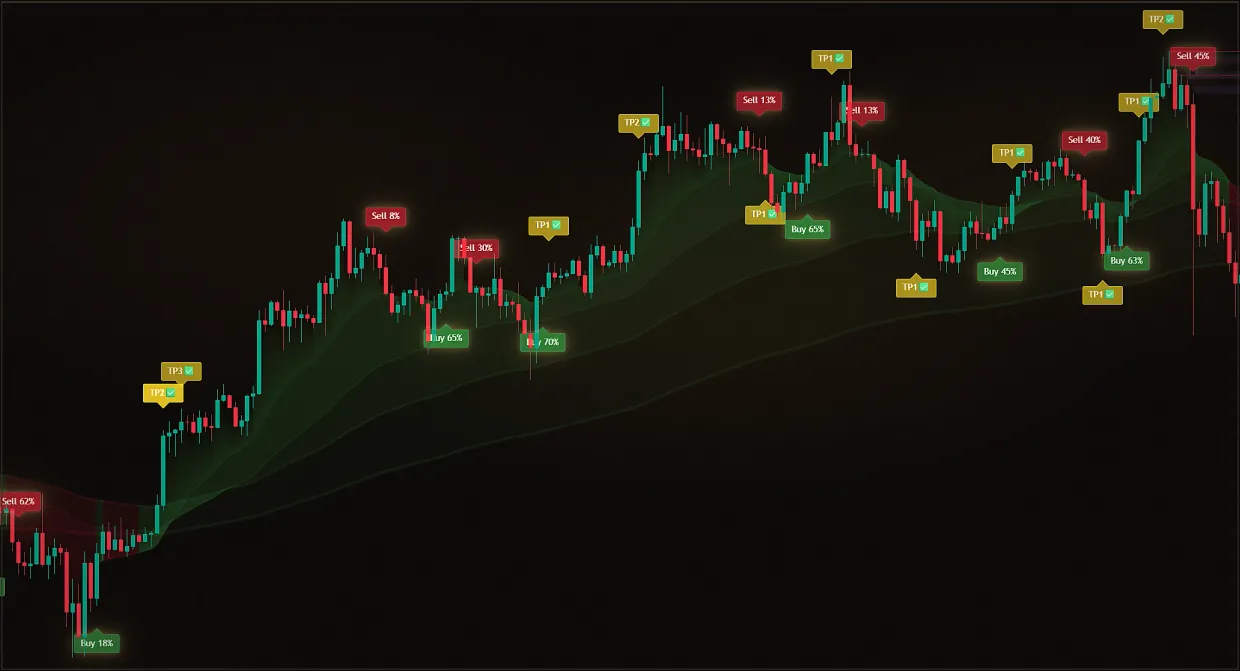
Support forms where enough buyers have once accumulated to stop the decline. When the price returns to the same area, some participants remember this place and act the same way - hence the self-fulfilling nature of levels. The more times the market has reversed from the area and the more noticeable these reversals were, the more seriously it is taken.
Practical detail: support is a range, not an exact value. Trying to place a stop exactly under a line drawn from a single touch almost guarantees getting hit by noise. It is wiser to mark a zone based on multiple touches and add a buffer tied to volatility.
The second point is that the role of the level changes after a breakout. A broken support usually starts to act as resistance: the price comes back to it from below, meets sellers, and moves further down. Such a return to a broken level is often used as an entry point because it provides a short stop.
Levels are convenient to look for at extrema of movements, range boundaries, and large round numbers, but the mere presence of a line guarantees nothing. A level only makes sense together with the price reaction to it: you come to the zone, see a pause and a reversal candle - this is a working support. You come and fall through - the zone is no longer there.