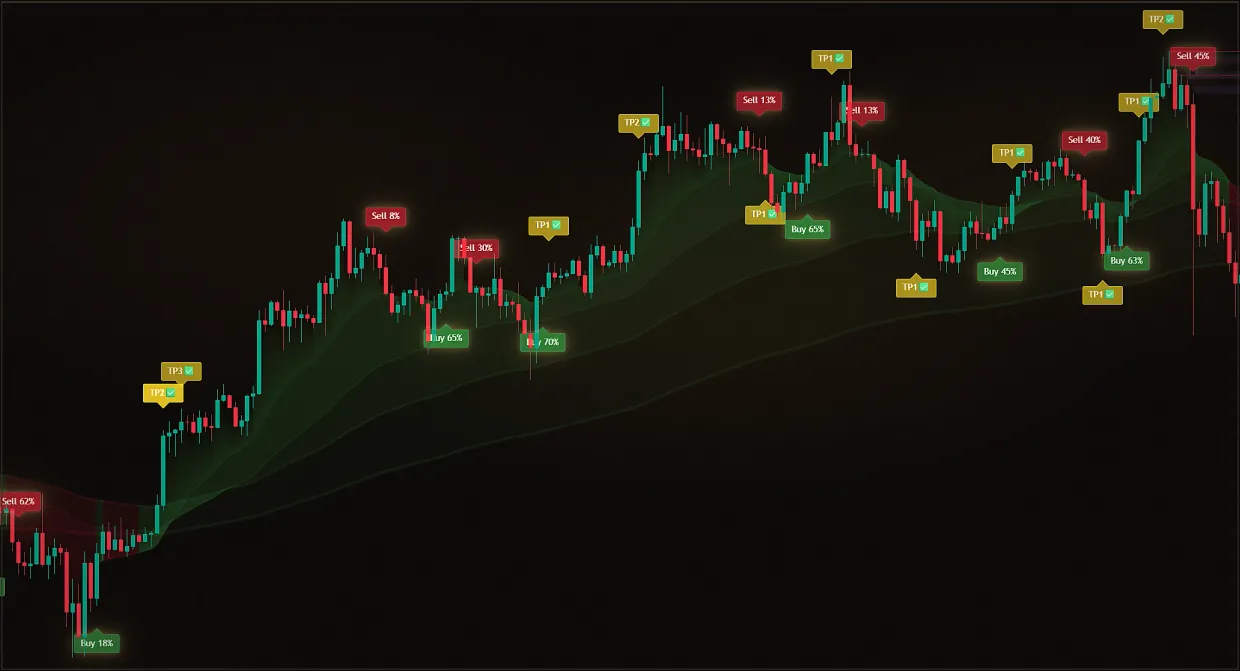
Lag, or delay, is built into the very nature of calculation. A 50-period moving average averages the last fifty candles, and for the line to turn, enough new candles must accumulate to outweigh the old ones. By the time the line turns, a significant part of the movement has already occurred.
The size of the lag is directly related to the period. A short period means the indicator reacts quickly, but it jerks at every noise and gives more false signals. A long period results in a smooth and reliable line, but the signal comes late. This is not a flaw in the settings, but a trade-off, and it cannot be avoided.
Indicators are generally divided into lagging and leading. Lagging indicators confirm a move that has already started; examples include moving averages and MACD. Leading indicators try to identify a reversal earlier, usually by measuring momentum; oscillators fall into this category. The tradeoff is unavoidable: earlier signals are also more likely to be wrong.
Practical conclusion: lag cannot be eliminated, but it can be managed. The direction is determined by the lagging indicator, while the entry point is sought based on price and levels where there is no delay. It is also worth remembering separately that trying to remove lag aggressively with very short settings usually worsens the result rather than improves it.