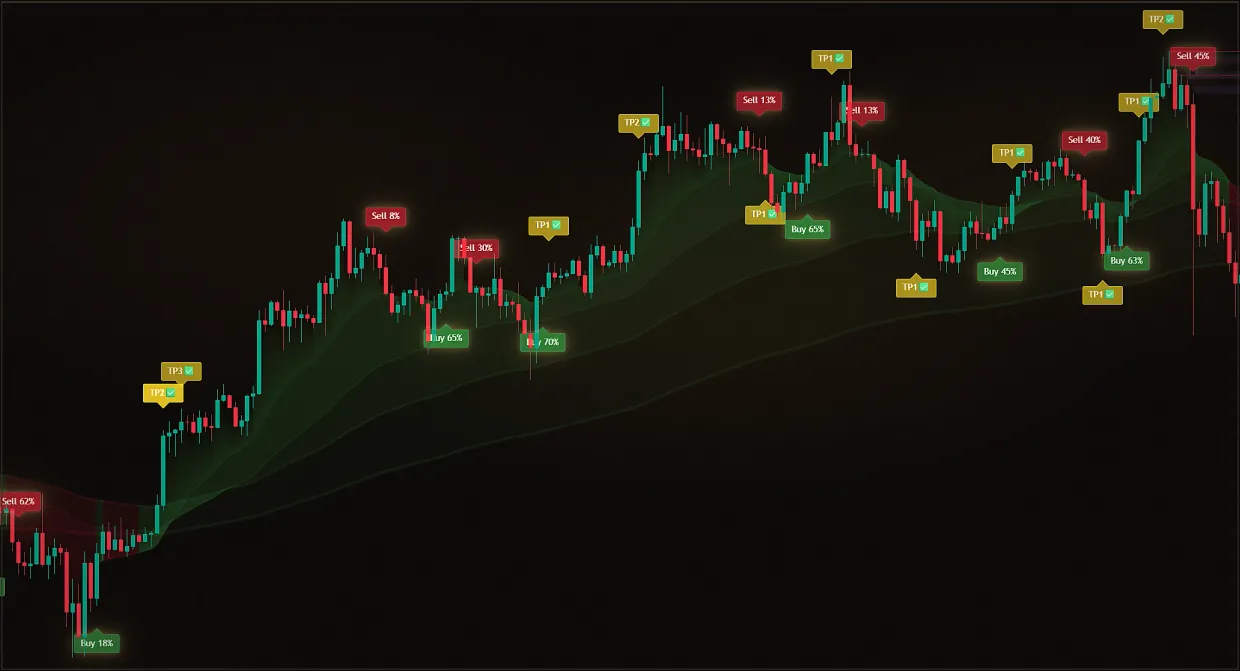
A false signal is not a malfunction of the indicator and not a sign that the tool is bad. Any indicator is based on past prices, and the future is not determined by them, so some of the triggers will inevitably be empty. There is no method that has no false signals at all—if someone promises that, it's a reason to be cautious.
Most false signals are caused by a mismatch between the tool and the market regime. Trend indicators can cross on every fluctuation in a sideways market, while oscillators may remain overbought for months in a strong trend. The formal trigger is present, but the signal lacks useful context.
Several measures can reduce their frequency. First, use a higher-timeframe filter and exclude signals that conflict with the broader chart. Second, require confirmation from an independent measure, such as volume. Third, demand a well-defined entry point close enough to the invalidation level to keep the stop reasonably tight.
False signals cannot be eliminated completely with filters. Each new filter removes not only false triggers but also some valid ones, and a system with too many conditions may stop producing trades altogether. The goal is not zero errors, but a workable balance between their frequency and the payoff from successful entries.