

What Is Forex and Why Is It Needed?
A foreign exchange transaction may serve a routine business purpose. In a hypothetical example, an importer needs to pay for goods in euros but receives revenue in another currency. If the exchange rate changes, the purchase cost changes as well. Exchanging currency and entering into a contract for a future exchange rate address different parts of this problem.
According to a BIS review, average daily turnover in the over-the-counter foreign exchange market was approximately 9.6 trillion dollars in April 2025. This figure covers all included foreign exchange instruments, including spot transactions, forwards, and swaps, with double-counting between dealers eliminated. It does not mean that retail traders have access to that amount of profit every day. Source: BIS review.
A spot transaction involves an exchange with a near-term settlement date. A forward fixes the terms of a future exchange. A currency swap combines an exchange with a reverse transaction on another date. Forex therefore describes a broad market, while the specific instrument must be identified in the contract.
How Does the Interbank Market Differ from a Forex Dealer and an Exchange?
| Format | What Defines the Trade | Which Risk to Check |
|---|---|---|
| Interbank Forex | Terms agreed between professional counterparties | Fulfillment of obligations and settlement |
| Retail Forex Dealer | The client's contract with the dealer and the dealer's quotes | Counterparty, order execution, and withdrawal of funds |
| Currency Futures Contract | Exchange-traded contract specification | Leverage, margin, term, and settlement procedure |
The CFTC issues a separate warning that, in retail over-the-counter trading, the dealer is the counterparty to the trade. A claim of “access to the interbank market” on an intermediary's website does not by itself explain the legal structure of your transaction. CFTC explanation.
CME currency futures are settled through CME Clearing, which reduces counterparty credit risk. The risk of a market loss caused by exchange-rate movements remains. An exchange-traded contract also requires you to study its specification; you cannot compare it with retail Forex based only on an EUR/USD chart. CME FX Futures overview.
How Do You Read a Currency Pair and Its Spread?
The difference between the ask and bid is called the spread. In this educational example, the dealer quotes EUR/USD at 1.1000 / 1.1002. Buying 1000 euros at the ask and immediately selling them at the unchanged bid results in a loss of 0.20 dollars: 1000 × (1.1000 − 1.1002). This calculation covers only the price difference, excluding separate commissions and other costs.
- 1
Buy at the ask
1000 euros × 1.1002 dollars
- 2
Sell at the bid
1000 euros × 1.1000 dollars
- 3
Price difference
Loss of 0.20 dollars before commissions
If you buy the EUR/USD pair, a rise in the euro against the dollar is favorable for that position before costs are taken into account. If you sell the pair, the direction is reversed. However, the name of the pair does not tell you whether you are buying currency for delivery or entering into a derivative contract. Investor.gov guide to quotes and forms of trading.
How Do Leverage and Margin Work?
Consider a separate hypothetical example. The position's notional value is 10 000 dollars, and the margin is 1000 dollars. The ratio is 10:1. An unfavorable change of 1% in the position's value produces a loss of 100 dollars before costs. Relative to the 1000-dollar margin, that is already 10%.
This example is not a forecast, trading signal, or recommended leverage ratio. It shows the difference between a change in the market and a change in your equity. If the account contains other positions, the total exposure will be different. The forced-liquidation threshold must be found in the account terms; there is no universal value for every platform.
- 1
Position size
10 000 dollars; margin 1000
- 2
Move against the position
1% of 10 000 = 100 dollars
- 3
Loss relative to margin
100 out of 1000 dollars = 10%
Investor.gov explains the same principle: the smaller the amount deposited relative to the contract's value, the more leverage amplifies relative losses. Margin is not a promise that losses will be capped at that amount. Leverage warning.
Risks and Limitations
During a sharp market move, volatility increases, and execution may differ from what was expected. Dealer risk and restrictions on withdrawing funds are separate concerns. The CFTC recommends checking registration and disciplinary history, as well as watching for promises of returns and obstacles to withdrawals. CFTC advisory.
Negative balance protection depends on the applicable rules and the type of account. For example, ESMA explains this protection for retail CFD accounts within its own legal framework. This condition cannot be assumed to apply to every foreign dealer or exchange-traded futures contract. ESMA clarification.
This material is not personalized investment advice. The market is volatile, and trading involves the risk of losing capital. Past results do not guarantee future results.
What Does a Forex Expert Advisor Do?
A Forex Expert Advisor is a program that follows predefined analysis rules and can submit trading orders. In MetaTrader, such programs are called Expert Advisors. Their ability to trade depends in part on the permissions configured in both the platform and the Expert Advisor itself. MetaTrader 5 documentation.
Automation does not change the counterparty to the contract, the spread, or the size of an open position. If a rule is flawed, the program can repeat the error without becoming tired. It is therefore more useful to define its stopping conditions first: the maximum total position it may open, when it must stop opening new trades, and how execution will be verified.
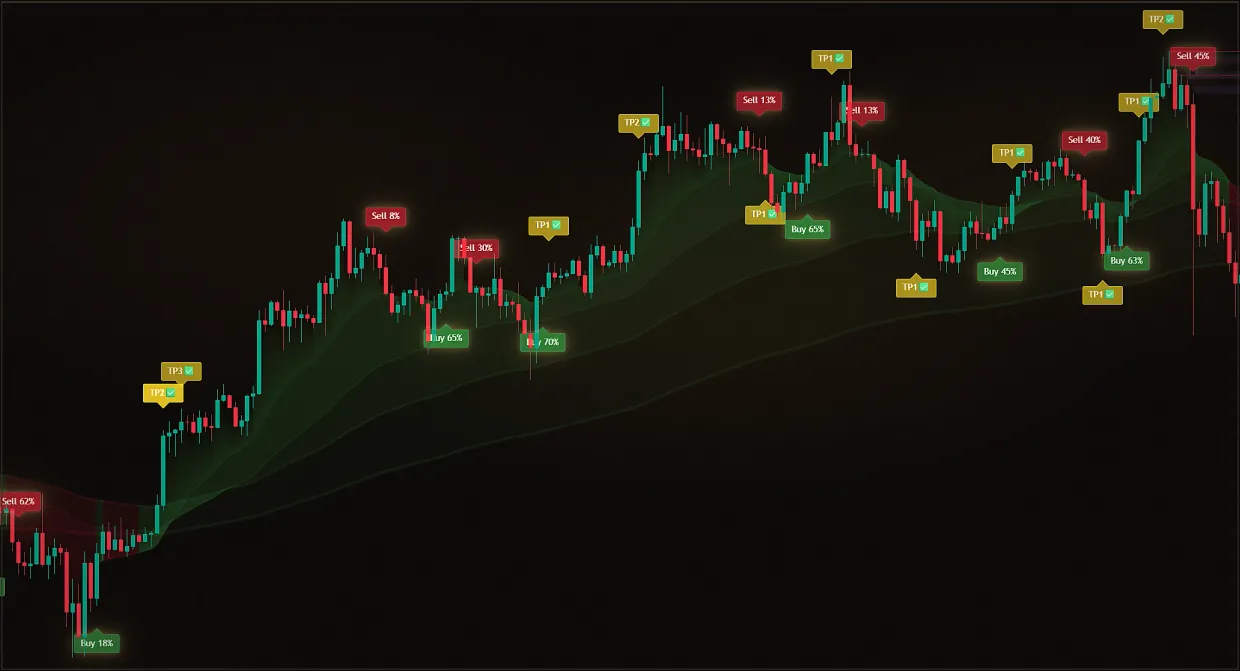
Be sure to distinguish among a chart indicator, an alert, and a trading robot. A visible arrow does not prove that an order was submitted. To verify this, check the activity log and the actual position in the terminal. A product name or an attractive report is no substitute for this check.
Suitable if
- The entry and exit rules can be explained before launch
- The maximum position size is limited in advance
- There is a trade log and a way to stop new orders
Not suitable if
- The algorithm is hidden and only an equity curve is available
- Losing positions are increased without a predefined limit
- It is impossible to determine which orders the program has already submitted
This card provides a procedure for checking a program, not an assessment of a specific Expert Advisor. Even meeting every condition does not prove that a strategy is profitable.
How Do You Test an Expert Advisor Before Live Trading?
The MetaTrader 5 Strategy Tester includes a forward period: the later portion of the historical data is separated from the section used for parameter optimization. This helps reveal overfitting. Modeling and execution-delay settings are also available and should be saved together with the result. Strategy Tester documentation.
Record the following in your own testing log:
- The name and version of the Expert Advisor, the currency pair, and the chart timeframe.
- The historical interval, the source of quotes, and the holdout period that was not used for parameter selection.
- The position size, loss limits, and conditions for suspending trading.
- Costs, the execution model, and any discrepancies found.
- The outcome on a demo account under the same rules.
If you change the parameters after reviewing the separate period, that period has already influenced the configuration. The next independent test requires new data. This is a practical consequence of separating fitting from testing, not a promise that a profitable set of parameters will be found.
Where Can You Check an Intermediary and the Terms of a Trade?
For a Russian Forex dealer, the starting point is the Bank of Russia section containing its list of Forex dealers. For the US retail over-the-counter model, the NFA describes the permitted types of counterparties and operating requirements; these are US rules, not a universal license to operate worldwide. NFA regulatory guide.
Request the documents for the specific account and find answers to four questions: what exactly is being purchased, who is responsible for fulfilling the obligations, what costs arise when opening and holding the position, and when forced liquidation and withdrawal of the remaining balance are possible. If the answer is hidden behind an advertising claim, the structure of the transaction is still unclear.
Where Should You Start Learning About Forex?
It is useful to save a small checklist: “instrument, counterparty, purchase price, sale price, position size, margin, costs, closing conditions.” Complete it using the documents from your chosen platform. A blank line will reveal a specific question that still needs to be clarified.
It makes sense to study technical analysis after that. You can continue learning about charts and analytical methods in the Midas knowledge base. The structure of the account and the position's risk remain separate parts of the decision.
Sources
- BIS: over-the-counter foreign exchange market turnover in April 2025.
- CFTC: what you need to know before trading Forex.
- Investor.gov: foreign currency trading for individual investors.
- CME Group: how the currency futures market works.
- NFA: guide to Forex regulation in the US.
- ESMA: limits of negative balance protection.
- Bank of Russia: registers of financial market participants.
- MetaTrader 5: Expert Advisors and automated trading permissions.
- MetaTrader 5: backtesting and the forward period.
Frequently Asked Questions
Is Forex a single exchange?
No. Forex includes over-the-counter foreign exchange transactions between different participants. Currency futures are traded on specific exchanges according to their specifications. You need to examine the type of instrument and the contract, not just the name of the currency pair.
Can you lose more than the margin you deposited?
Yes. With some instruments and account terms, losses may exceed the initial margin. The availability and limits of negative balance protection must be checked separately. The amount of required margin does not by itself determine the maximum loss.
Why does a trade show a loss immediately after it is opened?
The spread may be one reason: a purchase is executed at the ask price, while it can be closed at the bid price. Commissions may also affect the result. First check the opening price and the potential closing price, then review how costs are charged.
Can a Forex Expert Advisor operate without supervision?
A program can follow rules automatically, but algorithm, configuration, and execution errors remain possible. You need position-size limits, an activity log, and a clear way to stop the program. Automation alone does not confirm the quality of a strategy.
Does a profitable backtest prove that an Expert Advisor is reliable?
No. The result depends on the data, costs, execution model, and parameter selection. Testing on a separate period and monitoring on a demo account help identify weaknesses. These steps do not guarantee future profits.



Comments
Source comments are not translated and are never replaced with Russian text.