Risk in trading is not about fear or the 'dangerous market.' It's about the number that the trader states before entering: this is how much I am willing to lose on this trade. Before the trade is opened, stating such a number calmly is easy. After opening, the same decision is made on emotions, and almost always in a worse way.
Risk is calculated simply: the distance from the entry point to the stop loss, multiplied by the position size. From this formula, the main point is clear - risk can be managed in two ways. Either place the stop closer, or take a smaller position. Usually, the correct order is this: first, the allowable percentage of the account for a single trade is chosen, then the position size is calculated based on it. The other way around is no longer a calculation, but hope.
The risk of a streak deserves separate attention. One losing trade won't bankrupt anyone, but ten in a row are a common occurrence even for a profitable strategy. Therefore, you need to look not only at the percentage per trade but also at what will remain of the account after a rough patch. If, after a losing streak, it becomes psychologically impossible to continue trading, it means the risk chosen was too high, no matter how reasonable it may have seemed when thinking calmly.
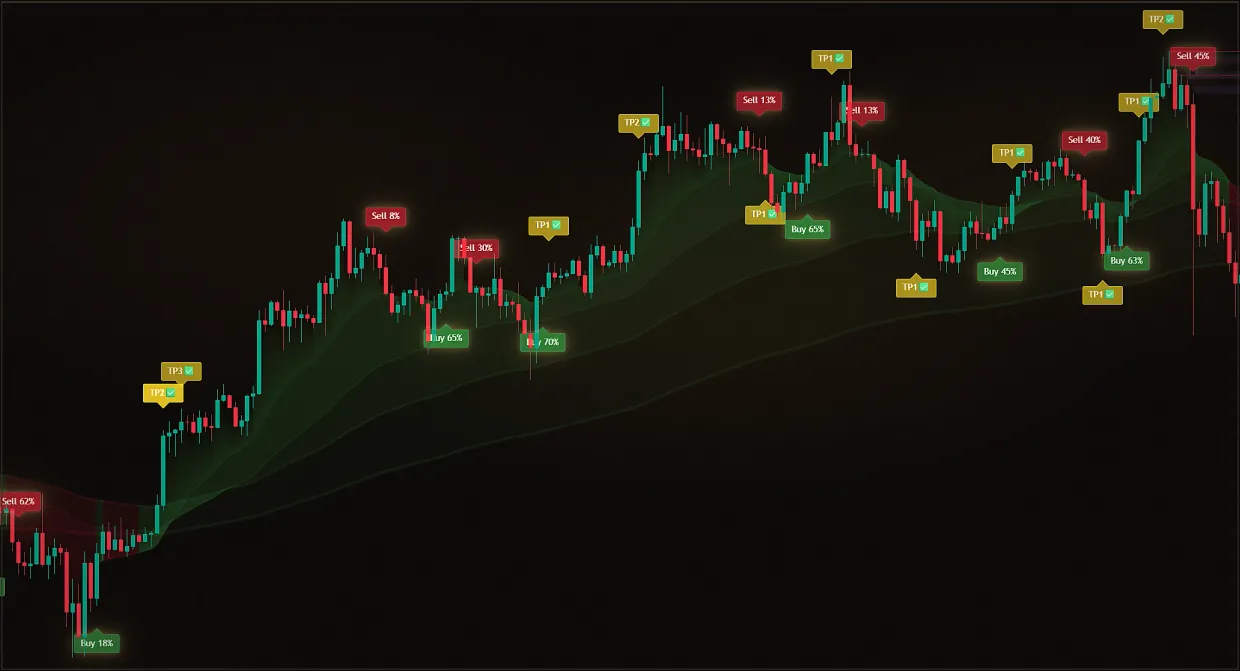
The indicator here does not replace calculation. The signal suggests the timing and direction, but how much to place and where to exit is the trader's decision, and it is precisely this that determines whether the account will survive an unsuccessful streak.