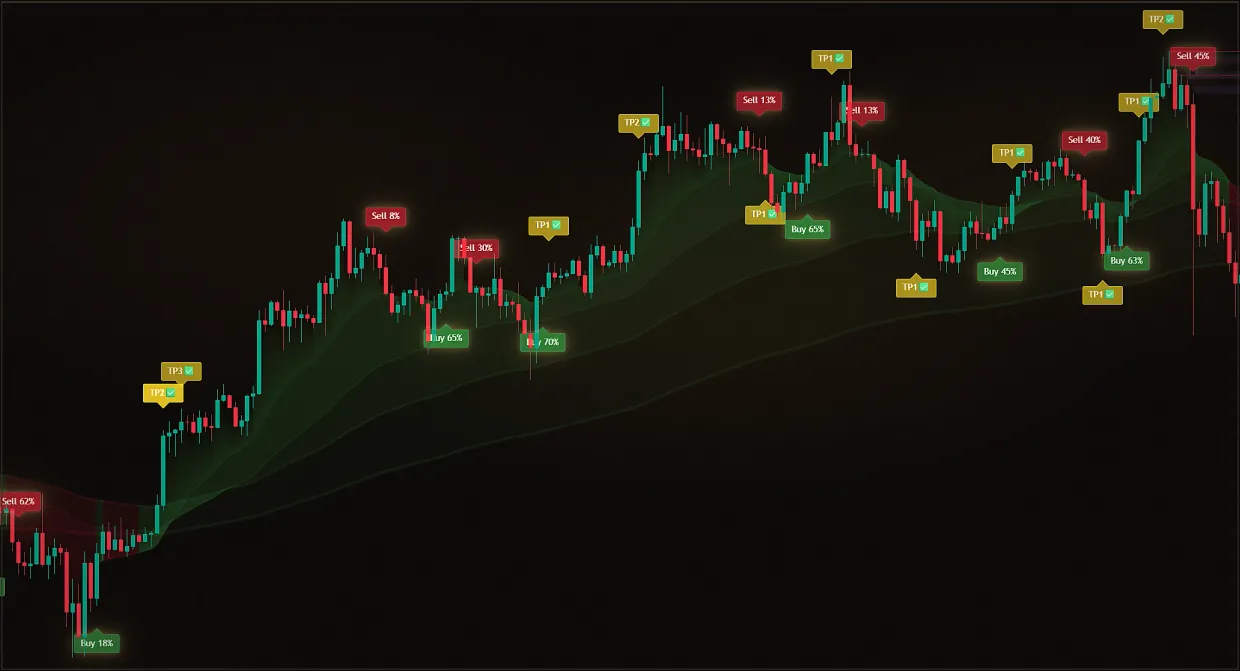
Take profit solves a task that is symmetrical to a stop: to determine in advance where a trade is considered completed. Without it, an exit turns into improvisation - a profitable position is either closed too early out of fear of losing gained profit, or held until it reverses into a loss.
The target is usually set not by round numbers or by the desired amount, but according to the chart: the nearest significant resistance level, the boundary of a range, a high-volume area. The point is to have the target where the movement is likely to encounter resistance, not where one would like it to be.
Take profit should be evaluated together with the stop. The ratio between the distance to the target and the distance to the stop affects the win rate a system needs to be profitable. A farther target relative to the stop allows for a lower required win rate. An entry with a nearby target and a distant stop is therefore usually unattractive, even when the signal looks appealing.
A common compromise is a partial exit: close half of the position at the first target and move the stop to break even, leaving the remainder for further movement. This reduces both the emotional burden and the likelihood of giving back already earned profit.