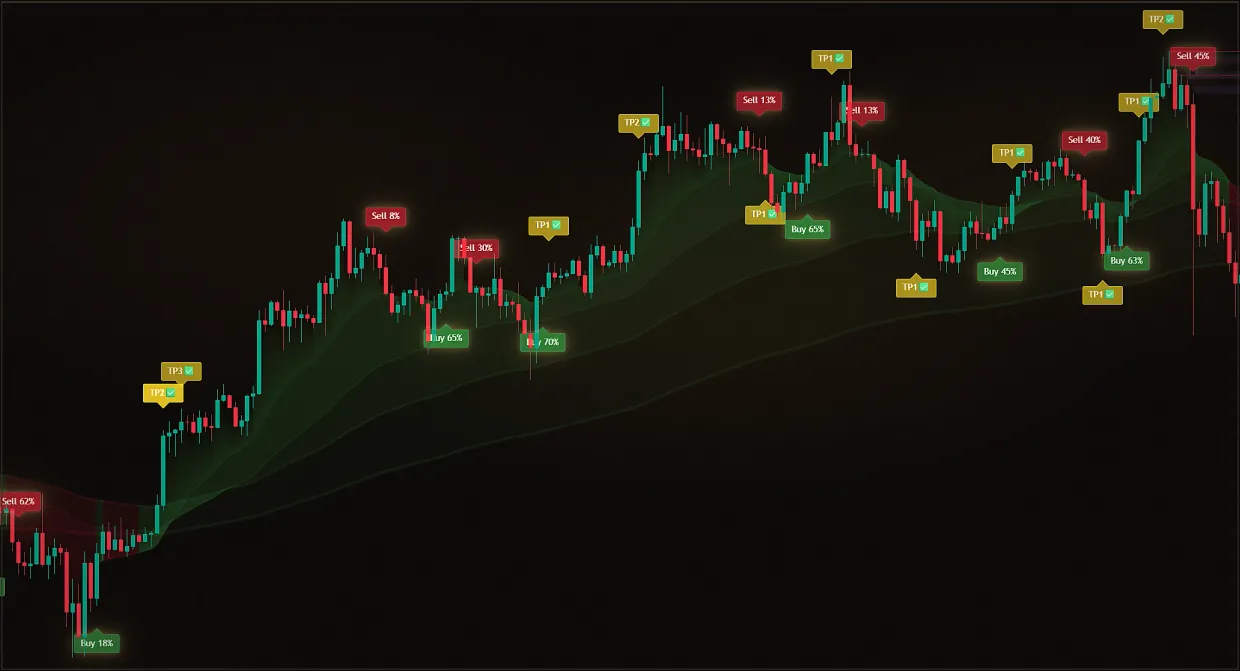
Backtesting answers the question, 'Has this idea ever worked at all?' The rules are formulated unambiguously, run through past data, and the output is a set of numbers: how many trades there were, what proportion of them were profitable, how the average profit compares to the average loss, and what the maximum drawdown was.
The main value of a backtest is negative: it quickly shows that an idea does not work. It is cheap and useful. The opposite statement is weaker - a good result in the past does not mean that the method will continue to work.
The main trap is called overfitting. If you tweak the settings for a long time, you will always find a combination that looks brilliant on a specific segment of history. It describes that segment exactly, not the market. Signs of overfitting are recognizable: too many parameters, the result deteriorates sharply with a small shift of any of them, the test is done on a short piece of history or on a single asset.
What makes testing more honest. Test over a long period that includes different market conditions. Check robustness on other assets and timeframes. Leave part of the history untouched and run the finished rules on it. And be sure to account for real costs - commissions and slippage turn many beautiful systems into unprofitable ones.