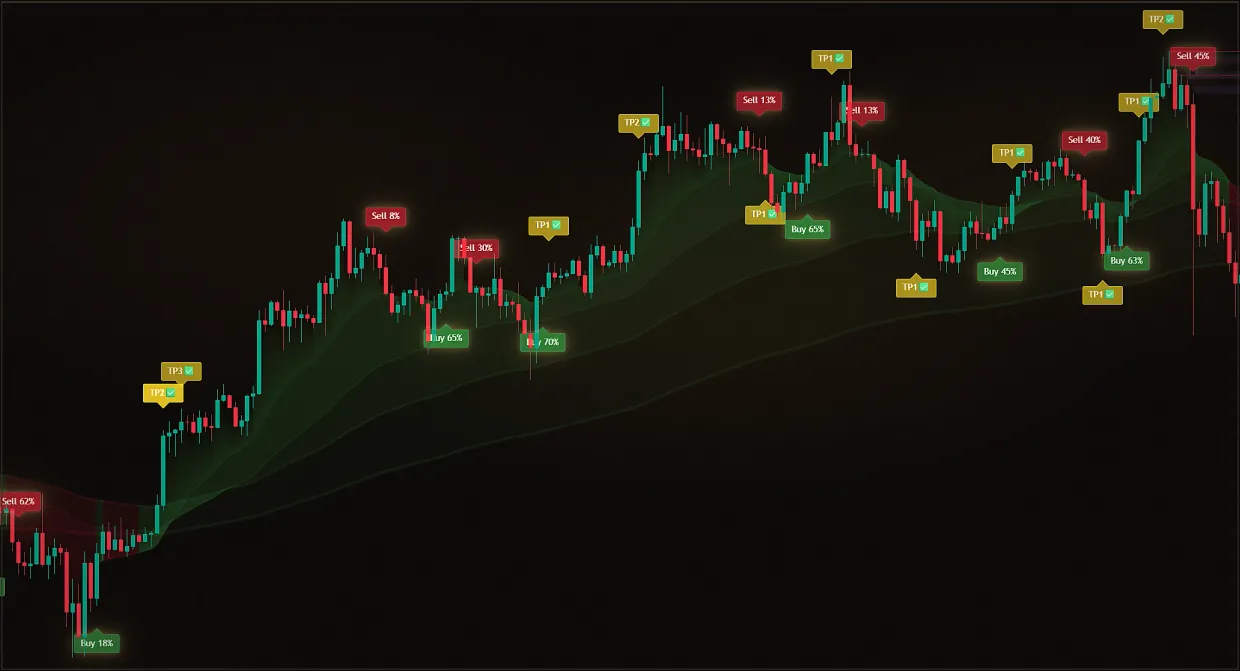
A stop loss is not an admission of weakness or a technical detail, but a way to answer in advance the question 'at what point do I admit that I was wrong.' While the position is not open, it is easy to answer it calmly. Once the position is opened, emotions come into play, and almost every trader who disagrees with the market finds convincing reasons to wait a little longer.
It makes sense to place a stop where the trade scenario ceases to be valid, not where patience runs out. If the entry was from a support level, it is logical to place the stop below the level zone with a margin for noise. It is convenient to link the size of the margin to volatility, for example through ATR: in a calm market the distance is smaller, in a heated market it is larger.
Position size is determined from the stop, not the other way around. First, decide what percentage of the account is acceptable to risk on one trade. Then measure the distance to the stop. Those two values determine the position size. This order keeps the planned loss consistent regardless of how far away the stop must be placed.
A separate common mistake is moving the stop toward a loss when the price has come right up to it. One such move usually ends in a loss that wipes out several profitable trades. Moving the stop only makes sense in the direction of reducing risk.